
Our Blog

40 Days of Prayer, Day 3
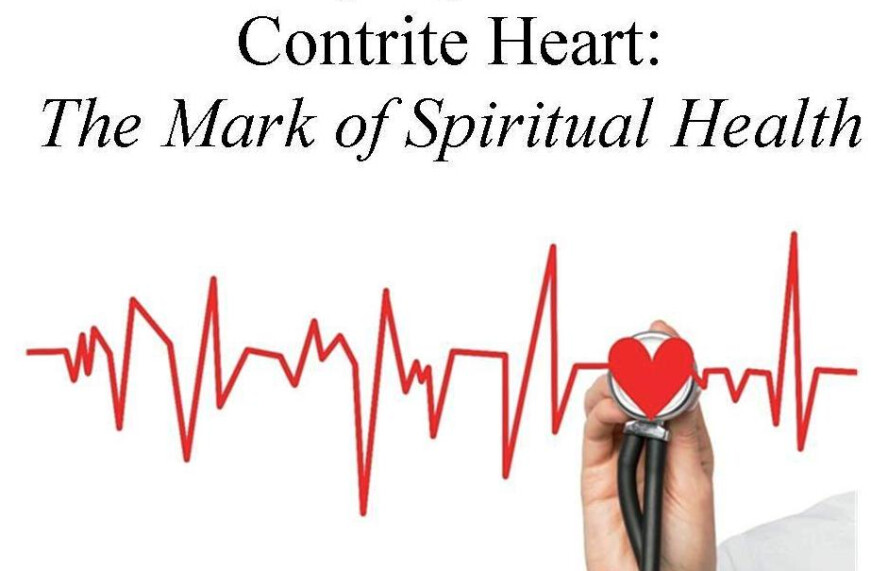
main image

Day 3, Tuesday, August 23

For You do not delight in sacrifice, otherwise I would give it; You are not pleased with burnt offering. The sacrifices of God are a broken spirit; A broken and a contrite heart, O God, You will not despise.” Psalm 51:16-17

The Sacrifices of God

For David and for all the Israelites who are reading this psalm, the sacrificial system of the nation of Israel would have been very familiar. There were regular sacrifices of worship and thanksgiving, along with offerings for sin. There were periodic ceremonies such as Passover and Yum Kippur, demonstrating the need for forgiveness and mercy for the whole nation. These events also celebrated God’s gracious provisions for the nation in the past. For David, having been caught in this egregious sin, the religious standards of his day dictated a journey to the center of religious life, the tabernacle. There, those riddled with guilt would confess and make sacrifice. Usually the offering of a lamb or some other animal would provide tangible expression for the confessor. Confidence in such religious rites arose out of the origin of these rites. God had provided Israel with the sacrificial system. This system, which was intended to give tangible expressions to the nation in times of thanksgiving and in times of repentance, came from God. David’s instinctive reaction after getting caught in adultery and murder would have been to run down to the tabernacle. However, David also knew the founder and author of these religious expressions. God never intended the ceremony to be a substitute for our hearts. God never intended the Passover to be celebrated as mere external religion. From the beginning of the formalized religious life of Israel, all of the sacrifices and ceremonies were intended to communicate profound spiritual truths that radiated out of a relationship between God and Israel. Each individual act of worship and sacrifice provided the individual the opportunity to express profound spiritual truths. These acts communicated aspects of God’s relationship to that individual and to the whole nation. God never intended these acts of worship to be disconnected from the heart of the worshiper.

Religion without Relationship

God is a God of relationships. He describes His relationship to us in a variety of ways. For instance, the Bible depicts God as a loving Father and us as His children. The Bible describes our relationship to God as similar to the way a sheep relates to a good shepherd. The Bible uses imagery for Christ’s relationship to the church as that of a groom to a bride. Jesus even described His relationship to Israel as a mother hen desiring to gather her chicks under her wing. God is a God of relationships and all religious expressions provided for Israel and for the church were granted by God as a means of expressing our relationship to Him. Sin breaks the relationship. God, as a God of relationships, offers grace and mercy and forgiveness. The tangible religious act of an offering for sin provided Israel a demonstrative means of expressing confession, contrition and God’s willingness to forgive. Not limited to sin offerings, gratitude also draws people closer to God and thus God provided offerings of thanksgiving as a means of expression for the nation’s gratitude for daily provisions. In addition to religious offerings, times of worship provided moments to cultivate intimacy. God provided worship for the Israel to enhance their relationship with Him. All of the formal religious ceremonies were intended to enhance the relationship. These ceremonies were never an end to themselves.

That is why David, though steeped in ceremonial traditions of the worship of Israel, does not run down to the tabernacle and offer a guilt offering. He has the resources. Surely the king of Israel could produce a bull or a lamb to offer. He has access for the tabernacle resided in Jerusalem, David’s city. David knew that no mere external religious expression would resolve the depths of the broken relationship between him and God. God knew David’s heart. God knew David’s motives. God knew long before David knew that to offer a sacrifice without the heart being fully engaged would be a fraud. David offered himself to God with a full confession of his broken heart. Broken hearts happen when relationships dissolve and the offending party feels the weight of the broken relationship. Mere external expressions can never restore what is broken at the heart level.  Our sin breaks the heart of God and damages our relationship to Him. God is a God of relationships. He knows our hearts better than we do. He seeks to restore the relationship because He is a God of relationships.

Prayer Focus

O God, You have created us for relationship.  My sin separates me from You.  No mere religious ceremony can make our relationship right.  Forgive me!  Restore me!  Give me a desire to walk with You.  Amen.


From Bunyan’s The Acceptable Sacrifice

Note by the way, that this broken and contrite heart is excellent only to God: 'O God, ' said David, 'You will not despise it.' By which is implied, the world does not have esteem or respect for such a heart, or for one that is of a broken and a contrite spirit. No, a man or a woman, that is blessed with a broken heart, is so far off from being esteemed by the world, that they are but burdens and trouble wherever they are or go. Such people carry with them unrest: they are in carnal families as David was to the king of Gath, troublers of the house (1 Sam 21). 

 Their sighs, their tears, their day and night groans, their cries and prayers, and solitary carriages, put all the carnal family out of order. Hence you have them brow-beaten by some, distained by others, and their company fled from and deserted by others. But mark the text, 'A broken and a contrite heart, O God, You will not despise, ' but rather accept; for not to despise is with God to esteem and set a high price upon.


40 Days of Prayer, Day 2

main image

Day 2, Monday, August 22

For You do not delight in sacrifice, otherwise I would give it; You are not pleased with burnt offering. The sacrifices of God are a broken spirit; A broken and a contrite heart, O God, You will not despise.” Psalm 51:16-17

“Wish”ful Thinking about the Heart

The opening lines of a famous song at Disney goes something like this: “When you wish upon a star, makes no difference who you are, anything your heart desires, will come to you. If your heart is in your dream, no request is too extreme, when you wish upon a star as dreamers do...”

This sentiment follows the long held view of many that all you need to do in life is to “follow your heart.” There are some immediate and obvious disconnects from reality in this song. For me personally, as a 48 year old, weakening and slowing as I age, I can dream of playing in the NBA all I want. My heart can be set upon playing in an NBA All-star game or winning an NBA title. Despite all the wishing, dreaming and heartfelt desire, reality dictates differently. I am way too slow and way too old not to mention the thousand plus talent issues. However, the more fundamental flaw with this overly optimistic view of life comes from its unrealistically hopeful view of the human condition. Underlying the very optimistic worldview is the unrealistic view that the heart possesses natural goodness.


Realistic Thinking about the Heart

Disney’s worldview concerning the condition of the human heart compared to the Scripture’s worldview concerning the condition of the heart could not be more distinct. Disney holds the view that if we follow the desires of our heart that our dreams will come true. In other words Disney views our heart as the conduit to good things. The Bible describes the heart in quite a different way. According to God, our hearts are completely untrustworthy. Jeremiah the prophet said it this way. “The heart is more deceitful than all else and is desperately sick; Who can understand it?” Jeremiah 17:9. The heart is the most deceitful thing in the world, according to the prophet Jeremiah. Our hearts tell bad lies. We lie to ourselves by pretending to be more spiritual than we really are. We lie to ourselves by pretending to be far less sinful than we really are. We lie to others by constantly presenting ourselves as kinder and more gracious than our actual thoughts. Worse of all we lie to God, trying to hide from Him our true struggles with sin. Our attitudes betray us. Our words betray us. Our actions betray us. In our natural bent, our heart leads us away from the things of God and away from that which is good.

We see this in the life of David. David defeated Goliath. We see David leading the nation into battle for the sake of the name of God. David, the anointed king of Israel, wrote many of the psalms, including this one. David prepared Israel for the construction of the temple as the locus for the worship life of the nation. All of this good but on the inside there was clearly trouble. After years of spiritual life and service, David’s deceptive heart betrayed him. This psalm, Psalm 51, comes from the pen of David. The inspiration for the psalm is not one of David’s moments of success. Instead, this psalm comes from David’s failures. David committed adultery with Bathsheba and then tried to cover for that sin with a greater evil, the killing of Uriah, Bathsheba’s husband. The condition of David’s heart was evil. This is quite a different and more realistic view of the heart than the song at a theme park. David followed the dreams of his heart. The results were catastrophic. We must pursue our relationship with God with a realistic view of who He is and who we are. He is absolutely holy and we are prone to sin in thoughts, words and actions.

Prayer Focus

God, we see in Your Word that my heart is prone toward trouble.  Even if no one else can see the inner thoughts of my heart and mind, You see and know them all.  Father, kind and gracious Lord, please protect me from my own hidden motives.  Please lead me away from the temptations that reside within my own heart.  My heart is not naturally pure.  But You, Oh Lord, are pure.  Take of Your heart and mind and give to me just a small measure so that I might be more like You. 


From Bunyan’s The Acceptable Sacrifice

Four things are very acceptable to God. The first is the sacrifice of the body of Christ for our sins. Of this you read in Hebrews 10 that His sacrifice is preferred to all burnt-offerings and all sacrifices; it is this that pleases God; it is this that sanctifies, and so makes all of us acceptable in the sight of God.

Second. Unfeigned love to God is counted better than all sacrifices, or external parts of worship. 'And to love Him with all the heart, and with all the mind, and with all the soul, and with all the strength, and to love his neighbor as himself, is more than all whole burnt-offerings and sacrifices' (Mark 12:33).

Third. To walk purely and humbly, and obediently, towards and before God, is another. Has the Lord as great a delight in burnt-offerings and sacrifices, as in obeying the voice of the Lord?, 'Behold, to obey is better than sacrifice; and to hearken than the fat of rams' (Micah 6:6-8; 1 Sam 15:22).

Fourth. And this in our text is the fourth: 'The sacrifices of God are a broken spirit: a broken and a contrite heart, O God, You will not despise.'


40 Days of Prayer, Day 1

main image

Day 1, Sunday, August 21

For You do not delight in sacrifice, otherwise I would give it; You are not pleased with burnt offering. The sacrifices of God are a broken spirit; A broken and a contrite heart, O God, You will not despise.” Psalm 51:16-17


The Heart

We live in a world of amazing medical advances. More than any generation before us, we understand the essential function of the muscle that resides in the center of our chests. We know with a great degree of detail the intricate operations of the human heart. The heart functions as the primary organ for the support of the rest of the body. When the heart stops, we die. Because of the essential nature of the heart to the health of each one of us, specialists in the medical profession spend their entire careers focused on the health of the heart. In the spiritual realm, the “heart” also functions as the primary support to the rest of our spiritual life. As an example, in this very verse, the psalmist uses “spirit” and “heart” interchangeably, “a broken spirit; A broken and a contrite heart…” Even in the world of modern science, we still speak of “a broken heart.” We speak of having “our hearts moved” or “our hearts full.” Just as the heart functions as the core of the person’s physical health, we speak of the core of a person’s spiritual health in terms of the “heart.” A heart surgeon understands exactly what his daughter means when she tells him that she has a “broken heart.” However, that surgeon also knows that none of the medical treatment he uses on a daily basis can eliminate that particular heartache. In the physical realm, a person could appear fairly healthy on the outside, but their heart may possess an underlying structural problem. So too, in the spiritual realm, a person may appear fairly healthy on the outside, but at the core of their spiritual being, not visible to those around them, there may be an underlying spiritual problem.


As we take a few days to contemplate the confession of David in Psalm 51, we begin with a heart examination. No EKG needed for this. Instead, we begin these forty days of prayer with some spiritual health questions. Right now, what does your heart love more than anything else in the world? On a daily basis, what cravings in the emotional, relational and spiritual realm mark your thoughts? What bitter thoughts reside deeply in your mind? Is there some hidden aspect of your daily life that you want no one else to know about? Do people around you perceive your spiritual life to be substantially better than it really is? When we discuss the contrite heart, it is best to begin with an honest assessment of our heart’s condition. When we go to a heart specialist, we need an honest evaluation of the physical health of our heart. Though we don’t want any problems with our heart, if there is a problem, we know that to begin the path to heart health we must begin with a legitimate, authentic assessment of our heart’s health. So also with our spiritual health, we begin with an assessment of our heart.


Prayer Focus

O, God, I confess to you that much of my daily struggles I hide from those around me.  But Lord, I cannot hide these struggles from you.  You know me.   I humble myself before You.  Reveal to me the true condition of my heart.  Amen.


From Bunyan’s The Acceptable Sacrifice

We have two things that present themselves to our consideration. First, that a broken spirit is a sacrifice to God. Second, that a broken spirit is to God, as that which goes beyond, all sacrifices. 'The sacrifices of God are a broken spirit.'  The demonstration of this is plain: for that heart God will not despise it.' A broken and a contrite heart, O God, thou wilt not despise.' Therefore I draw this conclusion: That a spirit rightly broken, a heart truly contrite, is to God an excellent thing. That is, a thing that goes beyond all external duties whatever; for that is intended by this saying, The sacrifices, because it answers to all sacrifices which we can offer to God; yes for it serves in the room of all: all our sacrifices without this are nothing.

12...6263646566676869707172